Environmental Law Codes
Mapping statutory enforcement in transboundary climate mandates, the High Seas Treaty (BBNJ), and the customary evolution of the precautionary principle.
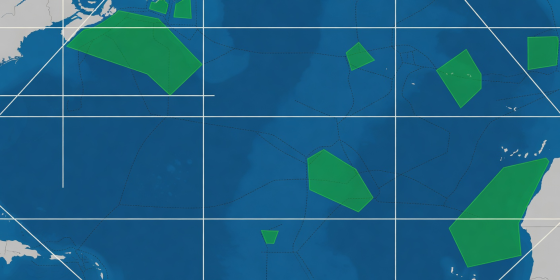
The High Seas Treaty (BBNJ) and Common Heritage
The landmark ratification of the Agreement under the United Nations Convention on the Law of the Sea on the Conservation and Sustainable Use of Marine Biological Diversity of Areas Beyond National Jurisdiction (BBNJ Agreement) marks a historic turning point in maritime public international law. Prior to this instrument, areas beyond exclusive economic zones (EEZs)—representing nearly two-thirds of the world's oceans—remained subject to fragmented governance regimes.
The BBNJ establishes formal legal architecture for Marine Protected Areas (MPAs) in international waters, mandatory environmental impact assessments (EIAs) for commercial oceanic activities, and equitable sharing frameworks for Marine Genetic Resources (MGRs). Translating these concepts from treaty text to operational monitoring protocols tests international maritime surveillance and collaborative governance.
Codifying the Precautionary Principle and Due Diligence
Historically categorized as an aspirational policy guideline, the Precautionary Principle has crystallized into a recognized customary norm in international tribunals. As reaffirmed by the International Tribunal for the Law of the Sea (ITLOS) in its advisory determinations, where prospective actions threaten irreversible environmental degradation, lack of absolute scientific certainty shall not justify deferring cost-effective regulatory intervention.
Furthermore, sovereign "due diligence" obligations are no longer satisfied by perfunctory administrative filings. Sovereign states are held to an objective standard of vigilance, requiring rigorous domestic enforcement oversight of non-state corporate entities operating under their registry or flag.
| Framework Instrument | Primary Scope | Enforcement Vector |
|---|---|---|
| BBNJ High Seas Treaty | Global Marine Protection, Marine Genetic Sharing | Conference of the Parties (COP) & Clearing-House |
| Paris Agreement (Art. 6) | Carbon Crediting, Nationally Determined Pacts | Supervisory Body Transparency Mechanism |
| Basel & Minamata Accords | Hazardous Waste, Mercury Discharges | Prior Informed Consent (PIC) Trade Controls |
The Emergence of Ecocide as a Codified Crime
Statutory initiatives submitted to the Assembly of States Parties to the Rome Statute of the International Criminal Court aim to formally insert "ecocide" as a fifth standalone international crime alongside genocide, crimes against humanity, war crimes, and the crime of aggression. By holding senior decision-makers individually criminally liable for systemic, long-term environmental devastation, international environmental law shifts from purely compensatory state liability toward direct individual penal accountability.